
Short answer
A crash with a commercial truck in New Jersey is handled differently from a crash between two cars: there can be several responsible parties (driver, company, trailer owner, whoever loaded the freight), federal rules require much higher insurance (from $750,000 for interstate general freight), and evidence like hours-of-service logs and the black box can be lost within days. Your PIP pays for your treatment first.
Key points
- Besides the driver, the company and other parties may be responsible.
- Interstate trucks must carry at least $750,000 in insurance, and more for hazardous materials.
- Driving-hour logs and the black box can be erased if no one asks to preserve them.
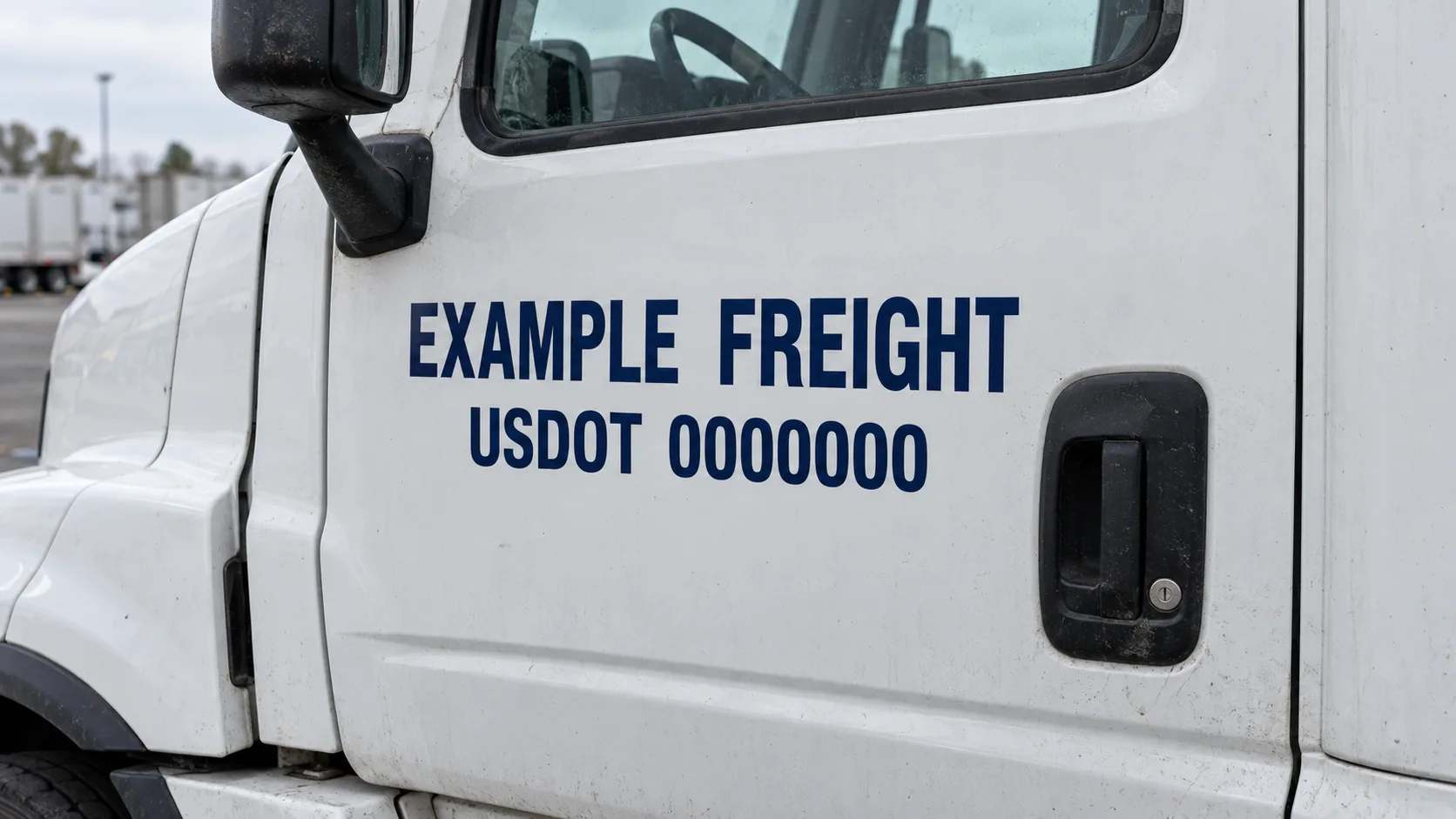
- Write down the company name and the USDOT number on the truck's door.
- Your PIP pays for your treatment first, even if the truck was at fault.
Why a truck crash isn't like any other crash
A loaded freight truck can weigh many times what a car weighs. That's why injuries tend to be more serious and treatment longer. But the difference isn't only physical. Commercial trucks operate under federal rules, carry much bigger insurance policies, and belong to companies that know how to defend themselves.
Many trucking companies have response teams that arrive at the scene within hours: adjusters, investigators, and sometimes attorneys. Their job is to protect the company. You need someone on your side too, and soon.
This applies to 18-wheelers, delivery trucks, package company vans, garbage trucks, tow trucks, and construction vehicles. If the vehicle belongs to a company, the case is probably commercial.
Who is responsible in a truck crash?
In a crash between two cars, there's usually one responsible party: the other driver. In a truck crash there can be several, and each can have its own policy:
- The driver, if they were distracted, tired, speeding, or ignoring signs.
- The trucking company, which is responsible for its driver and its decisions: hiring someone inexperienced, pushing impossible schedules, or not inspecting the truck.
- The trailer owner, which is sometimes another company.
- The company that loaded the freight, if the load was poorly secured or overweight.
- The maintenance shop, if a brake or tire failed because of a bad repair.
- The manufacturer of a defective part.
Identifying all the responsible parties matters because each one can contribute coverage. That investigation is the job of an attorney experienced in truck cases.
Higher insurance under federal law
The Federal Motor Carrier Safety Administration (FMCSA) requires companies that haul freight between states to carry minimum liability insurance much higher than a private car's:
| Type of freight | Federal minimum insurance |
|---|---|
| General freight (non-hazardous) | $750,000 |
| Oil and certain hazardous materials | $1,000,000 |
| Other hazardous materials | $5,000,000 |
These are minimums. Many companies carry more. Compared with New Jersey's minimums for a car, there's much more coverage available when injuries are serious and treatment lasts months.
The evidence that can disappear in days
Commercial trucks generate a lot of information, and almost all of it is in the company's hands:
- Hours-of-service logs. Federal rules limit how many hours a driver can drive without resting, and most use electronic logging devices (ELDs) that record those hours.
- The black box or engine control module, which stores speed, braking, and other data from the seconds before the crash.
- Truck cameras, which many companies install facing the road and the driver.
- Maintenance and inspection records for the truck.
- The driver's file: commercial license, drug and alcohol tests, driving record.
Some of this data can be overwritten or discarded if no one formally asks for it to be preserved. An attorney can send the company an evidence preservation letter a few days after the accident. That's one of the main reasons time matters more in these cases.
Trucking companies send their own team to the scene within hours. You need someone on your side too.
Your medical treatment: PIP still pays first
Even if the truck was entirely at fault, in New Jersey your own PIP coverage pays for your medical treatment first, just like in any car accident. The claim against the trucking company comes later and covers what PIP doesn't pay: treatment after the limit is used up, lost wages, pain and suffering, and other damages.
If your PIP limit is low, a serious injury can use it up fast. Check how much PIP you have and, if needed, read the complete guide to PIP coverage.
What to write down at the scene
- The company name painted on the door of the truck or trailer.
- The USDOT number, which also appears on the door. With that number you can look up the company in FMCSA records.
- The truck and trailer plates, which may be from different states.
- The driver's name and their commercial driver's license (CDL) number.
- Photos of all the vehicles, of the freight if it fell, and of the marks on the pavement.
- Witnesses, including other truck drivers who stopped.
If you're too injured to do this, ask a relative to go to the scene or the police station as soon as possible. For the general steps, see what to do in the first 48 hours.
Trucks in Newark, Elizabeth, and North Jersey highways
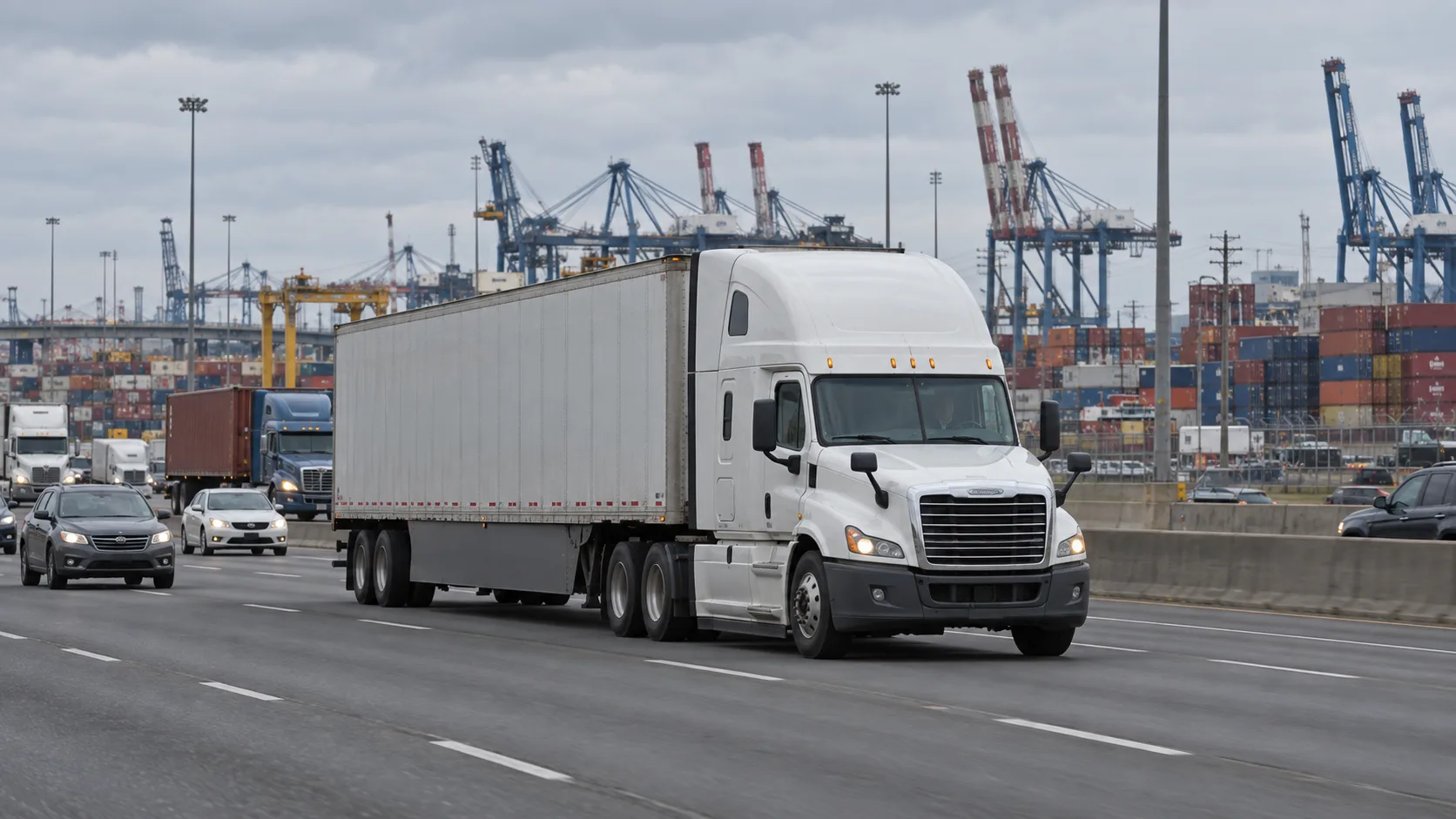
The Port of Newark and Elizabeth is one of the busiest on the East Coast, and that means thousands of trucks every day on Route 1&9, Route 22 in Union, the New Jersey Turnpike, Route 78, and the Garden State Parkway. Paterson and Union City also have a lot of delivery traffic. If you live or work in these areas, you share the road with trucks every day.
The most common truck crashes include rear-end collisions when the truck doesn't brake in time, lane-change crashes in the blind spot, wide right turns on city streets, and accidents caused by poorly secured freight.
The most common causes of truck crashes
Understanding why the crash happened helps identify who's responsible. The causes we see most are:
- Driver fatigue. Federal hours-of-service rules exist because driving too many hours is dangerous. When a company pushes impossible deliveries, the risk goes up.
- Distraction, like using a phone or dispatch system while driving.
- Speeding for the weight the truck is carrying. A loaded truck needs much more distance to stop.
- Worn brakes or tires from lack of maintenance.
- Poorly secured or overweight freight, which can make the truck tip over or lose control on a curve.
- Blind spots. Trucks have large areas on the sides and behind where the driver can't see cars.
How to protect yourself on the road
NHTSA recommends that car drivers stay out of trucks' blind spots, don't cut them off, leave more distance when braking, and be patient on turns. A simple rule: if you can't see the truck's mirrors, the driver can't see you either.
This doesn't change who's at fault in a crash. Commercial truck drivers are obligated to drive carefully and follow federal rules. But knowing these risks helps keep your family safer.
When the trucking company calls you
It's common for an insurer or a representative of the trucking company to call you a few days after the crash. They may offer to pay for your car repair quickly, or even an amount for your trouble. Before you accept, remember that a settlement can close your injury claim forever, and that in a truck crash injuries can take weeks to show how serious they are.
Ask for any offer in writing, don't give recorded statements, and don't sign broad medical authorizations without understanding what they're for.
Delivery vans and company vehicles
Not every commercial vehicle is an 18-wheeler. Package vans, municipal garbage trucks, contractor vehicles, and store delivery vans are commercial too. If the vehicle belongs to a public entity, like a city or county truck, the deadlines to give notice can be much shorter than the general two years. In those cases, getting guidance is urgent.
The driver's commercial license and record
Drivers of large trucks need a commercial driver's license (CDL) and must meet federal health, drug and alcohol testing, and training requirements. Companies are obligated to check their drivers' records. If a driver had serious violations, a history of accidents, or a suspended license and the company hired them anyway, the company may have its own liability.
That information doesn't show up at the scene. It's obtained during the investigation, and that's why it's important to have representation early.
Call soon
Don't wait for the trucking company to call you. If a truck hit you, call us today at 908-287-9998 or send us your info. We review your case in English or Spanish, at no cost, and if it warrants it, connect you with a New Jersey attorney experienced in truck cases who can act fast to preserve the evidence.
Frequently asked questions
How much insurance does a commercial truck have?
Federal rules require at least $750,000 for interstate general freight, $1,000,000 for oil and certain hazardous materials, and $5,000,000 for other hazardous materials.
Who pays if a company truck hit me?
Your PIP pays for your treatment first. After that there may be a claim against the driver, the trucking company, and other responsible parties.
What is the USDOT number?
It's the trucking company's federal registration number. It's on the truck's door and lets you identify the company in FMCSA records.
Why is it urgent to act after a truck crash?
Because data like the black box, cameras, and hours-of-service logs can be overwritten or discarded if no one asks for them to be preserved.
How long do I have to file a claim?
In general, two years from the accident for a personal injury lawsuit in New Jersey, but in truck cases it's worth acting within days to preserve the evidence.
What do I do if the trucking company's insurer calls me?
Ask for any offer in writing, don't give recorded statements, and don't sign settlements or broad medical authorizations until you understand your rights.
What if a city truck hit me?
Claims against public entities in New Jersey have notice deadlines much shorter than the general two years. Get guidance as soon as possible.
Sources
This article is general information, not legal advice. Laws and policies change; confirm the details of your case with an attorney licensed in New Jersey. Accidente en NJ is a referral service operated by Liberty Billing Solutions LLC, not a law firm.