
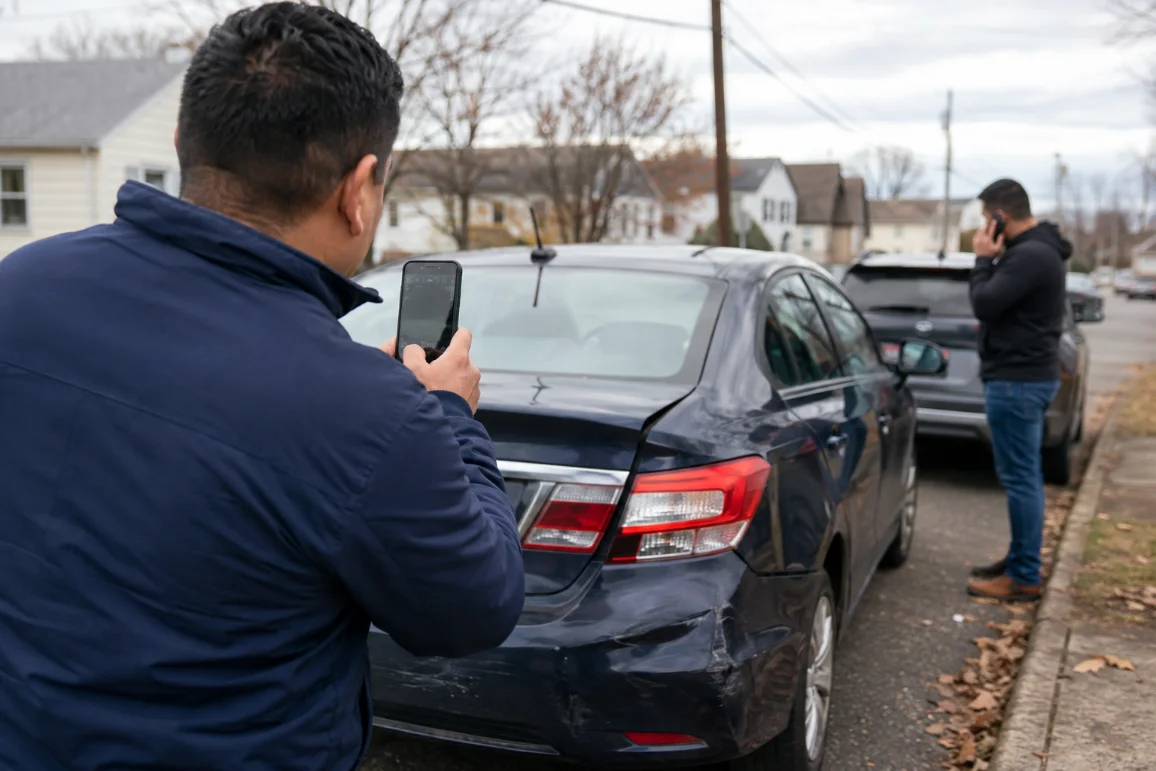
Short answer
In the first 48 hours after a car accident in New Jersey: call 911 if anyone is hurt, get the police report number, take photos, see a doctor even if you feel fine, notify your own insurance company to activate your PIP coverage, and don't sign anything or give recorded statements to the other driver's insurer until you understand your rights.
Key points
- Your own PIP insurance pays for your medical treatment first, no matter who was at fault.
- Seeing a doctor the same day or the next day creates the record that backs up your claim.
- The police report and photos of the scene are the hardest evidence to replace.
- You're not required to give a recorded statement to the other driver's insurance company.
- In New Jersey, you generally have two years to file a personal injury lawsuit.
What to do at the scene of the accident
The first minutes after a crash are confusing. There's noise, nerves, and often another driver who wants to settle everything quickly and without the police. What you do in that moment decides what evidence will exist later, so it's worth following an order.
1. Get to safety and call 911
If the car can still move and no one is seriously hurt, move it out of traffic and turn on your hazard lights. On a fast road like the Garden State Parkway, Route 1&9 in Elizabeth, or Route 21 in Newark, staying stopped in the lane is dangerous. Call 911 even if the crash seems small. The police create the official report, and that document is the basis of almost every claim.
In New Jersey the law requires reporting accidents with injuries, deaths, or significant damage to the police. But even if you're not sure your case reaches that level, asking an officer to come is almost never a mistake. A verbal agreement on the street doesn't protect you.
2. Exchange information, but don't argue about fault
Ask the other driver for their name, phone number, license number, plate, car make and model, and the name of their insurance company with the policy number. Take a photo of their license and insurance card if they allow it. You must give the same information.
Avoid phrases like "it was my fault" or "I didn't see you." It's normal to want to apologize, but those words can show up later in the claim. Describe the facts to the officer and let fault be decided by the evidence.
3. Get the police report number
Before the officer leaves, ask for their name, the department (for example, the Paterson or Union City police), and the report number. With that number you can request a copy in a few days. Without it, getting the report takes longer.
What evidence to keep from day one
Insurance companies decide based on documents. The more complete your records, the less room they have to deny or reduce the claim. This is the list we recommend:
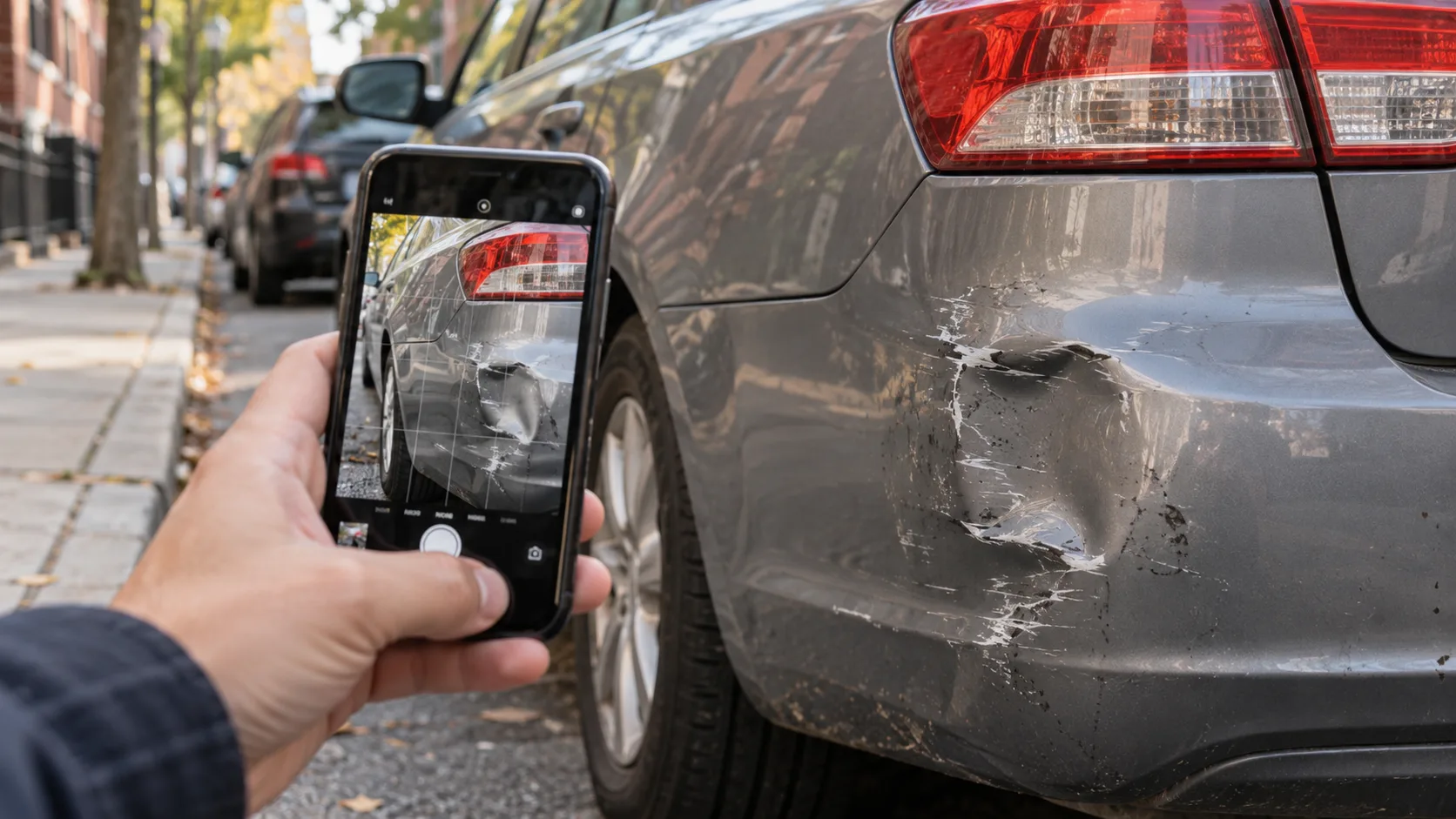
- Photos of all the vehicles, close up and from a distance, including the plates.
- Photos of the scene: traffic lights, stop signs, skid marks, glass on the ground, the weather, and the lighting.
- Photos of your injuries the same day and in the following days. Bruises change color and then disappear.
- Names and phone numbers of witnesses. A witness who doesn't know anyone involved is very valuable.
- Nearby cameras: note any stores, gas stations, or homes with cameras. Many systems delete video within a few days.
- Receipts for towing, rental cars, medication, and rides to the doctor.
- Missed work days, with a note from your employer if possible.
Keep everything in a folder on your phone or in an envelope. If you later decide to talk to an attorney, having this organized saves weeks.
Should I see a doctor if I feel fine?
Yes. This is the most important decision of the first 48 hours. Many car accident injuries, like neck injuries (whiplash), lower back injuries, and some head injuries, don't hurt right away. Adrenaline hides pain for hours or even a day.
If you don't see a doctor and the pain shows up a week later, the insurance company will say the injury didn't come from the accident. Your medical record is the evidence that links the injury to the crash. That's why it's worth getting checked at the ER, an urgent care clinic, or by your regular doctor within the first 24 to 48 hours.
When you're seen, describe everything you feel, even if it seems minor: headache, dizziness, tingling in your hands, pain when you turn your neck, trouble sleeping. What isn't written down at the first visit is hard to add later.
Who pays for that first visit?
In New Jersey, your own auto policy includes PIP (Personal Injury Protection) coverage. PIP pays for your reasonable and necessary medical treatment after the accident, no matter who was at fault. That's why it's also called "no-fault" insurance. If you don't have a car or your own policy, another policy may pay, such as one belonging to a relative you live with. We explain it in our guide for pedestrians.
How to notify your own insurance company
Notify your insurance company the same day or the next day. Call the number on your insurance card or use the company's app. Have your policy number, the date, time, and place of the accident, and the police report number ready.
Notifying your insurer is not admitting fault. It's what opens your PIP claim so they start paying for your treatment. Policies require prompt notice, and reporting late is one of the most common reasons payments get complicated.
Ask for your claim number and write down the name of the adjuster assigned. Also ask them to confirm in writing what PIP limit your policy has. Many people find out after the accident that they bought $15,000 of medical coverage instead of $250,000. In this guide we explain how to find that number.
What not to do in the first 48 hours
It's common for the other driver's insurance company to call very quickly. Sometimes the same day. The adjuster is usually friendly and asks for "just a few details" or a recorded statement to "speed up" the case. You're not required to give that statement, and you don't have to decide anything on that call.
- Don't sign documents from the other insurance company, especially broad medical authorizations or payment agreements. A signed settlement can close your claim forever.
- Don't accept a quick check without knowing how much your full treatment will cost.
- Don't post about the accident on social media. Insurance companies check Facebook and Instagram.
- Don't guess when you're asked something you don't know. "I'm not sure" is a valid answer.
- Don't skip your medical appointments. Missed visits are used to say the injury wasn't serious.
How long do I have to file a claim in New Jersey?
In general, New Jersey law (N.J.S.A. 2A:14-2) gives you two years from the date of the accident to file a personal injury lawsuit. It sounds like a lot of time, but it isn't. Videos get deleted, witnesses move, and records take months to arrive. Some cases have shorter deadlines, for example when the responsible party is a public entity, or when you have to file with the state fund for uninsured drivers, which requires notice within 180 days.
New Jersey also uses a comparative fault rule: if you were partly at fault, you can receive reduced compensation, as long as your share isn't greater than the other driver's. That's why it matters not to accept blame at the scene or on calls with insurance companies.
Your policy can also limit your right to sue for pain and suffering. Many New Jersey policies have the option called "limitation on lawsuit." With that option, you can only claim pain and suffering if the injury meets certain requirements, such as a permanent injury. Check your declarations page, or ask us and we'll go over it with you.
If the accident was in Newark, Elizabeth, Paterson, Union, or Union City
The rules are the same across the state, but each city has its own police department and its own way of releasing reports. In big cities like Newark and Paterson, requesting the report can take more days, so it's best to do it early. In areas with heavy truck traffic, like around the port in Elizabeth and Newark, it's common for the other vehicle to be commercial. Those cases work differently, and we explain them in our guide on truck crashes.
Union City and downtown Elizabeth have a lot of foot traffic. If you were walking or on a bike, your coverage options change. If you were in an Uber or Lyft, see the guide for rideshare accidents.
After 48 hours: the first week
Once the shock wears off, the paperwork starts. In the first week, it's worth requesting a copy of the police report, following the treatment plan your doctor gave you, and keeping a simple log of how you feel each day. A short note on your phone, like "today I couldn't pick up my son because of my back pain," is worth a lot later, because it shows how the injury affects your daily life.
If your car was damaged, your insurer or the other driver's will ask for a repair estimate. Ask the shop for photos before they start repairs.
When to ask for help
Not every accident needs an attorney. But it's worth talking to someone if you had an injury that needs treatment for more than a few days, if you missed work, if the other insurance company is pressuring you, or if there are questions about who was at fault.
Accidente en NJ is a free referral service. We listen to you in English or Spanish, review what happened, and if your case warrants it, connect you with a personal injury attorney licensed in New Jersey. The call is free and doesn't commit you to anything. You can call us at 908-287-9998 or send us your info and we'll call you the same day.
Frequently asked questions
Do I have to call the police after a minor crash in New Jersey?
The law requires reporting accidents with injuries, deaths, or significant damage. Even if the crash seems minor, the police report is the main evidence for your claim, so it's worth calling.
Who pays my doctor after a car accident in NJ?
Your own PIP coverage pays first for reasonable and necessary medical treatment, no matter who was at fault. If you don't have your own policy, a policy of a relative you live with, or another policy involved, may pay.
Should I give a recorded statement to the other driver's insurance company?
You're not required to, and you don't have to decide on the first call. It's better to understand your rights before you give any recorded statement or sign documents.
How long do I have to sue after a car accident in New Jersey?
In general, two years from the date of the accident for a personal injury lawsuit. Some cases have shorter deadlines, such as claims against public entities or the state UCJF fund.
How much does it cost to talk with Accidente en NJ?
Nothing. The call is free and doesn't commit you to anything. If your case qualifies, we refer you to a licensed New Jersey attorney.
What do I do if the other driver doesn't want to call the police?
Call 911 yourself. Don't accept verbal deals or cash at the scene. Without a police report it's much harder to prove what happened.
Sources
This article is general information, not legal advice. Laws and policies change; confirm the details of your case with an attorney licensed in New Jersey. Accidente en NJ is a referral service operated by Liberty Billing Solutions LLC, not a law firm.