
Short answer
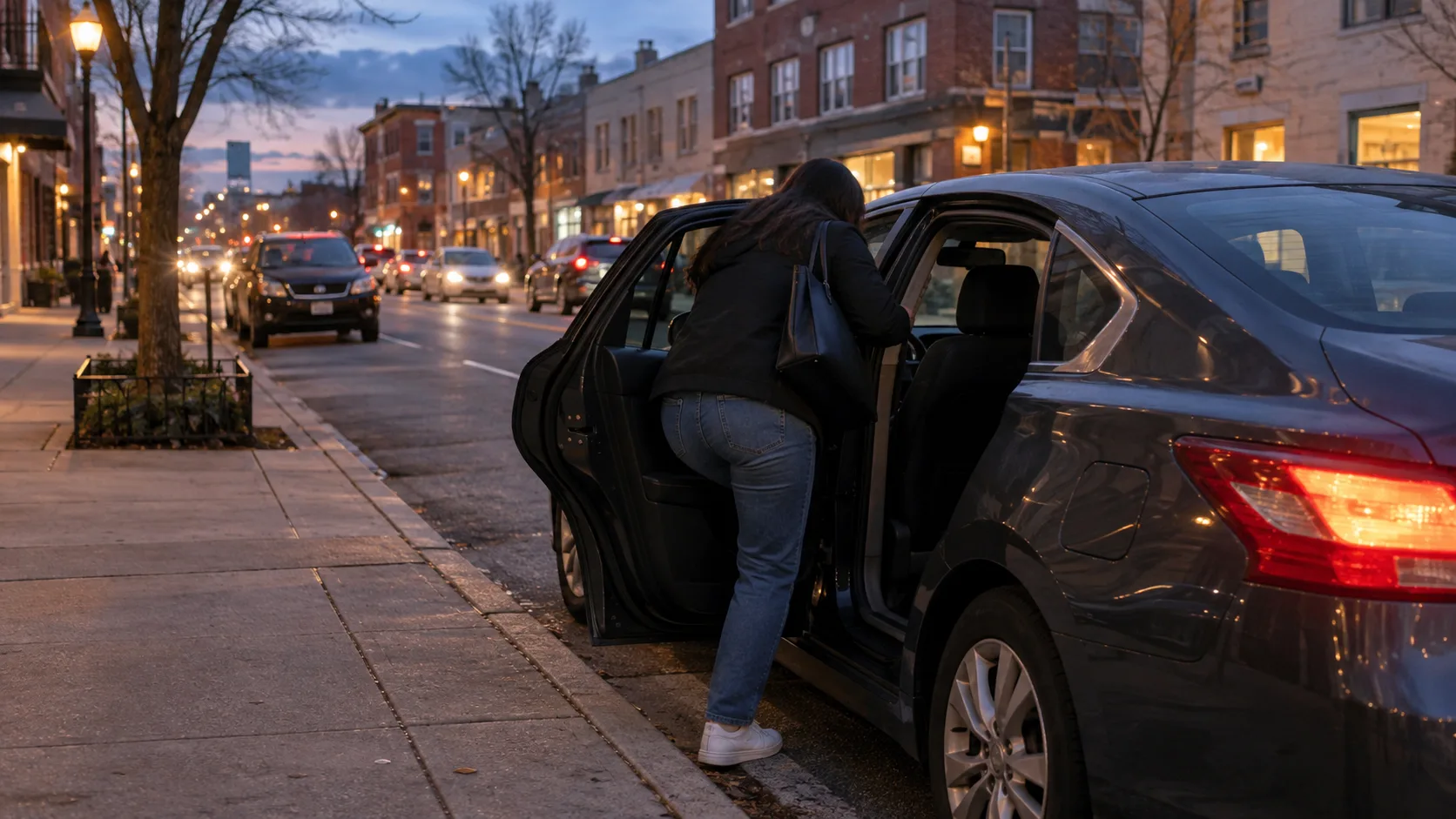
In New Jersey, coverage in an Uber or Lyft accident depends on the status of the app. With the app off, the driver's personal policy applies. With the app on and waiting for a ride, the law requires at least $50,000 per person and $100,000 per accident. From the moment the driver accepts a ride until the passenger gets out, the law requires at least $1.5 million in liability and $1.5 million in uninsured motorist coverage.
Key points
- The stage of the ride decides which policy applies and how much money is available.
- During an accepted ride or with a passenger, the law requires at least $1.5 million in coverage.
- A ride "starts" when the driver accepts the request, not when you get in.
- A screenshot of the app is one of the most important pieces of evidence.
- If you were a passenger, you may also be entitled to PIP from your own policy.
Why a rideshare accident is different
In a normal crash between two cars, there are two policies: yours and the other driver's. In an accident with an Uber or Lyft there can be four or more: the app driver's personal policy, the company's commercial policy, yours, and the other car's. Knowing which one pays first is the hardest part.
New Jersey regulates Uber, Lyft, and similar companies under the Transportation Network Company Safety and Regulatory Act (N.J.S.A. 39:5H-1 et seq.). The law calls them TNCs and requires minimum insurance levels depending on the stage of the ride.
The three stages that decide coverage
| App status | Who pays | Minimum coverage by law |
|---|---|---|
| App off | Driver's personal policy | Normal New Jersey minimums |
| App on, waiting for a ride | Driver, the company, or both | $50,000 per person, $100,000 per accident, $25,000 in property damage, plus PIP and UM/UIM |
| Ride accepted, on the way, or with a passenger | Company's commercial policy | $1.5 million in liability and $1.5 million in UM/UIM |
A detail many people don't know: under New Jersey law, the ride "starts" when the driver accepts the request in the app. So if the driver was on the way to pick you up and crashed, the highest coverage already applies, even though you hadn't gotten in the car yet.
It also matters that many personal policies exclude accidents that happen while the driver is logged into an app. That's why rideshare companies have to carry their own coverage.
If you were the passenger
As a passenger, you weren't driving and you weren't at fault. You have the right to have someone pay for your treatment and, depending on your injuries, to claim other damages.
For initial treatment, if you have your own auto policy, your PIP may pay first, like in any accident. If you don't have a policy, one belonging to a relative you live with or other available coverage may pay. For the injury claim, the company's $1.5 million coverage is what normally comes into play when the app driver was at fault.
If another car caused the crash, there may be a claim against that driver, and if they didn't have enough insurance, the rideshare company's uninsured motorist coverage may pay.
If you were the app driver
If you drive for Uber or Lyft and had an accident, the first thing is to know what status the app was in. With the app off, you're a regular driver and your personal policy applies. With the app on, check whether you had accepted a ride.
The law also gives app drivers certain medical benefits during an accepted ride, and the $1.5 million uninsured motorist coverage protects you if an uninsured car hit you while you were on a ride. Also, if you can't work because of your injuries, it's worth checking whether you have other coverage for lost income.
If your personal insurer didn't know you drive for an app, let us know. It's a common situation and it can be handled, but it's worth handling carefully.
What evidence to keep after an Uber or Lyft accident
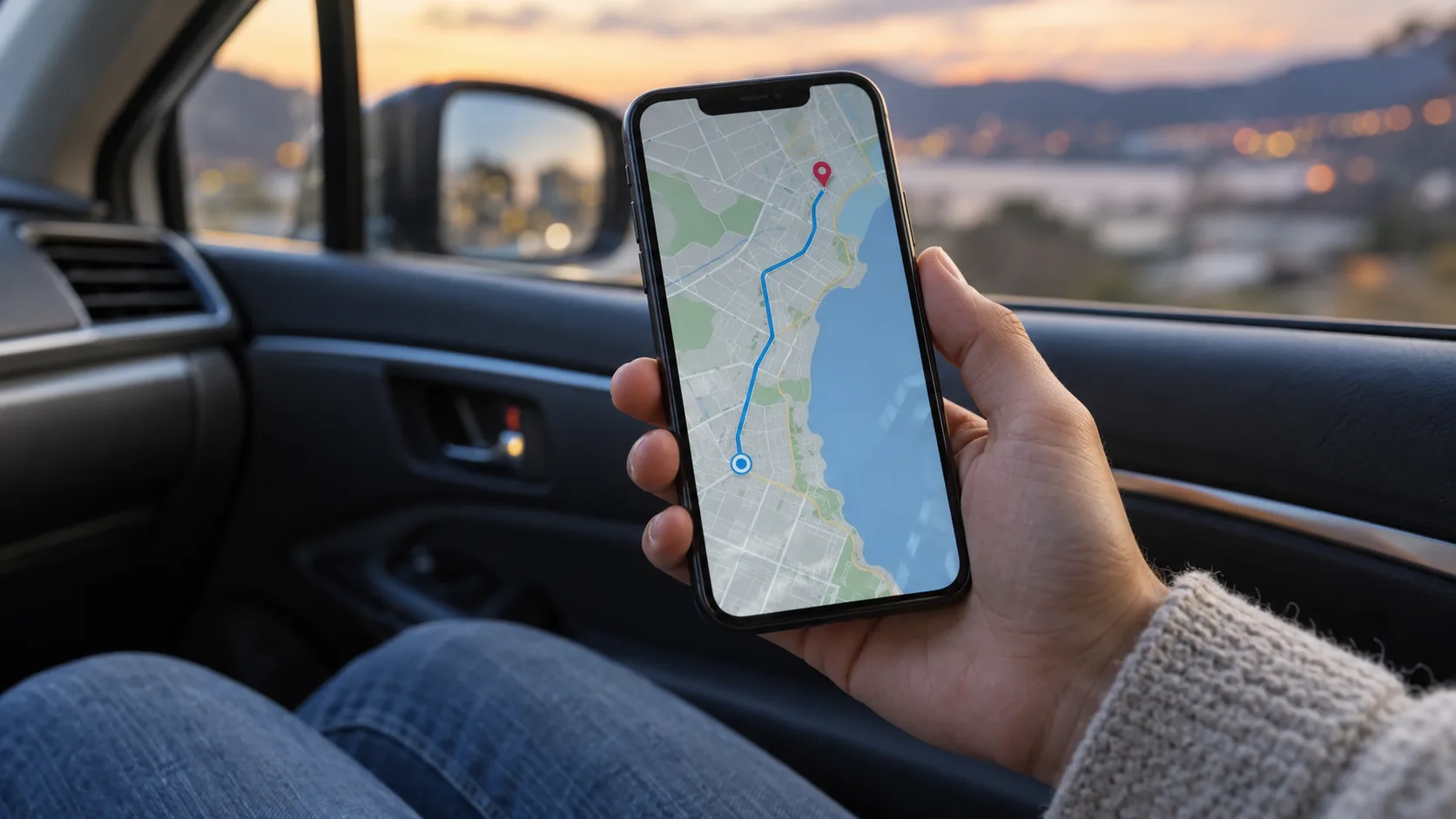
- Screenshot of the ride in the app: time, route, driver's name, and plate. Take it before you close the app.
- The ride receipt, which comes by email.
- An incident report in the app. Uber and Lyft have an option to report accidents.
- The police report number. Ask for the police to come even if the driver says it's not necessary.
- Photos of the vehicles, the scene, and your injuries.
- Names of other passengers and witnesses.
The company has its own GPS records and app status data. That data helps prove the stage of the ride, but you don't control it. Your screenshot is your copy.
Does the limitation on lawsuit apply?
In many New Jersey car accidents, the "limitation on lawsuit" in your policy restricts when you can claim pain and suffering. For accidents during a rideshare ride, the TNC law has its own rules that may give an injured passenger more options. Every case depends on the details, so it's worth reviewing with an attorney before accepting an offer.
Rideshare accidents in Newark, Elizabeth, and North Jersey
Newark airport, Newark Penn Station, and the nightlife areas in Elizabeth, Union City, and Paterson see a lot of Uber and Lyft traffic. In these areas, crashes are common during pickups and drop-offs, when a car stops suddenly or a door opens into traffic. If your accident happened that way, write down the exact location and whether there were other rideshare cars around.
If you were in another car and an Uber or Lyft hit you
If you were driving your own car and a rideshare driver hit you, your case starts like any crash: your PIP pays for your medical treatment first. What's different is the claim against the at-fault driver. If the app driver was on the way to pick someone up or carrying a passenger, the company's $1.5 million commercial policy may pay for your injuries. If the app was on with no ride, coverage is lower. If it was off, the driver's personal policy applies.
The problem is that you don't know what status the other driver's app was in. That's why it helps for the police to note that the vehicle was a rideshare, and for you to take photos of any Uber or Lyft sticker on the windshield.
If an Uber or Lyft car hit you as a pedestrian
Pedestrians and cyclists may also be covered by the company's policy, depending on the stage of the ride. For initial treatment, the same PIP rules apply that we explain in our guide for pedestrians: your policy, a relative's you live with, or the policy of the vehicle that hit you.
Common mistakes after a rideshare accident
- Closing the app without taking a screenshot. The ride information can change or disappear from your view.
- Letting the driver say "we don't need the police". Some drivers worry about losing their account, but the report protects you.
- Rating the ride or writing comments about the accident in the app before you understand your rights.
- Accepting a credit or refund from the app thinking it settles things. A ride credit is not compensation for injuries.
- Waiting for the company to call you. Report the accident yourself and keep the case number.
What if it was a food or package delivery driver?
Drivers for apps like DoorDash, Uber Eats, or Instacart also use their own cars. Insurance rules for deliveries can be different from those for carrying passengers, and each company has its own policy. If a delivery driver hit you, write down the name of the app, take a photo of any visible bag or sticker, and ask the driver whether they were making a delivery.
Deadlines to file a claim after a rideshare accident
The deadlines are the same as in any New Jersey car accident: in general, two years from the date of the accident to file a personal injury lawsuit. But in rideshare cases it's worth acting much sooner. The company's digital records, video from nearby cameras, and data from the driver's phone are easier to get and preserve in the first few weeks.
Also notify your own insurance company soon if you want to use your PIP. Late notice can complicate payments for your treatment.
If several passengers were injured
When several passengers are injured on the same ride, they all claim against the same policy. Even though $1.5 million sounds like a lot, in a serious crash with several people hurt, the coverage gets divided. It's another reason not to wait: whoever documents their case in time is in a better position.
Before you talk to Uber's or Lyft's insurance company
Rideshare companies use large insurers with experienced teams of adjusters. They'll probably call you soon and ask for a statement. You're not required to give it right away. First, understand which coverage applies to you based on the stage of the ride.
Call us at 908-287-9998 or send us your info. We review your case in English or Spanish and, if it warrants it, connect you with an attorney licensed in New Jersey who knows rideshare cases. For the general steps, also see the first 48 hours after an accident.
Frequently asked questions
How much insurance do Uber and Lyft have in New Jersey?
From the moment the driver accepts a ride until the last passenger gets out, the law requires at least $1.5 million in liability and $1.5 million in uninsured or underinsured motorist coverage.
What if the driver had the app on but no ride?
At that stage the law requires at least $50,000 per person and $100,000 per accident for injuries, $25,000 for property damage, plus PIP and UM/UIM coverage.
When does an Uber ride start for insurance purposes?
When the driver accepts the request in the app, even if the passenger hasn't gotten in the car yet.
Does my PIP cover me if I was a passenger in an Uber?
If you have your own auto policy, your PIP normally pays for your medical treatment first, like in any accident.
What's the most important evidence in a rideshare accident?
A screenshot of the app showing the status of the ride, along with the receipt and the police report number.
What do I do if an Uber hit my car?
Your PIP pays for your treatment first. For the injury claim, whether the driver's or the company's coverage applies depends on the status of the app. Ask the police to note that it was a rideshare vehicle.
Does accepting an app credit close my claim?
A ride credit is not compensation for injuries. Before you sign or accept any settlement, understand your rights.
Sources
This article is general information, not legal advice. Laws and policies change; confirm the details of your case with an attorney licensed in New Jersey. Accidente en NJ is a referral service operated by Liberty Billing Solutions LLC, not a law firm.